Climate Risks: From Reporting to Building-Level Adaptation
Climate change is fundamentally reshaping the requirements for property owners. Location-based risk analyses are often insufficient to derive concrete measures at the building level. What is needed is a precise understanding of climate risks at both the property and component level, particularly in the context of large portfolios.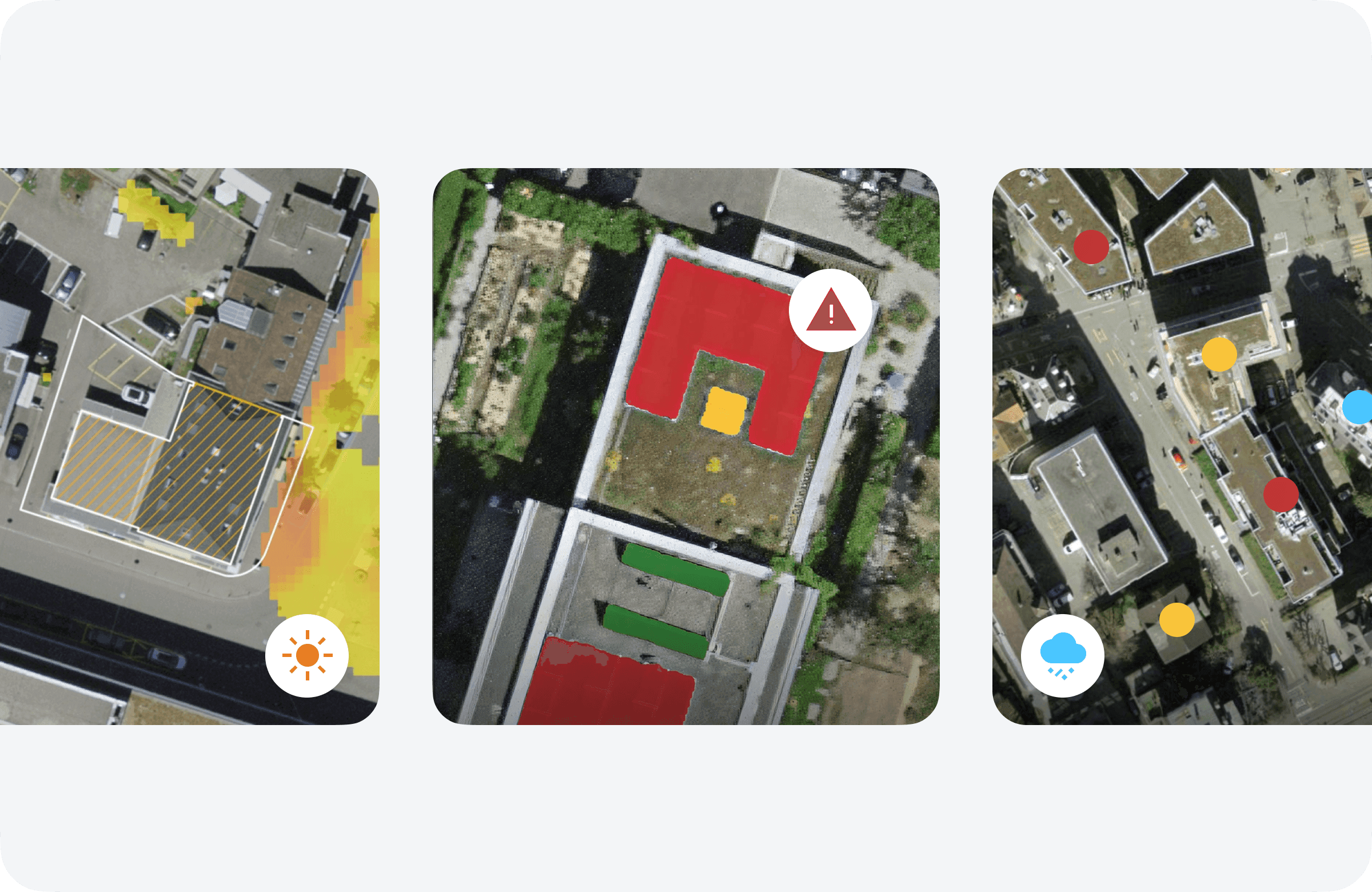
Heatwaves, extreme weather events, and regulatory requirements, such as those related to financial reporting, make it necessary to understand climate risks with spatial precision.
Conventional climate risk analyses primarily operate based on location and hazard maps. This is sufficient to establish a portfolio risk profile, but not to derive concrete measures for an individual building. What is required instead is a detailed understanding of each individual property – automated and scalable across the entire portfolio. NORM closes exactly this gap.
Comprehensive & Building-Specific Portfolio Analyses
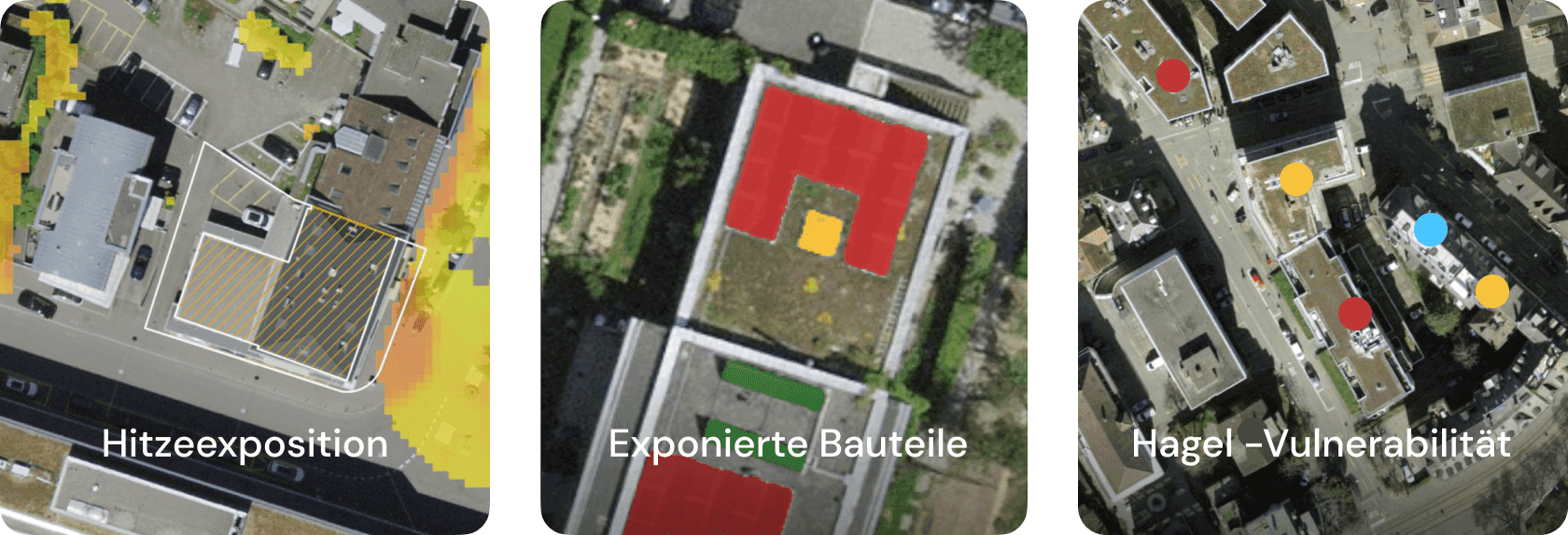
Buildings vary significantly in their vulnerability to natural hazards and climate risks. We analyse exposed building components to assess the vulnerability of individual buildings in an automated yet precise manner. This enables the derivation of targeted measures that have a real impact. Automated and across all of Switzerland. The following examples illustrate how this works in practice.
- Heat exposure: Using our proprietary methodology, we can calculate heat exposure and the scope for action for each property in detail.
- Exposed components: Our models detect vulnerability-relevant building components comprehensively and with high accuracy. These include roof materials, skylights, roof windows, solar thermal systems, façade surfaces, and window ratios.
- Vulnerability indices: We identify which buildings are particularly vulnerable to hazards such as hail. In addition, we show how individual components contribute to this vulnerability, for example which roof areas are affected and which materials are used.
Detailed View at Building Level
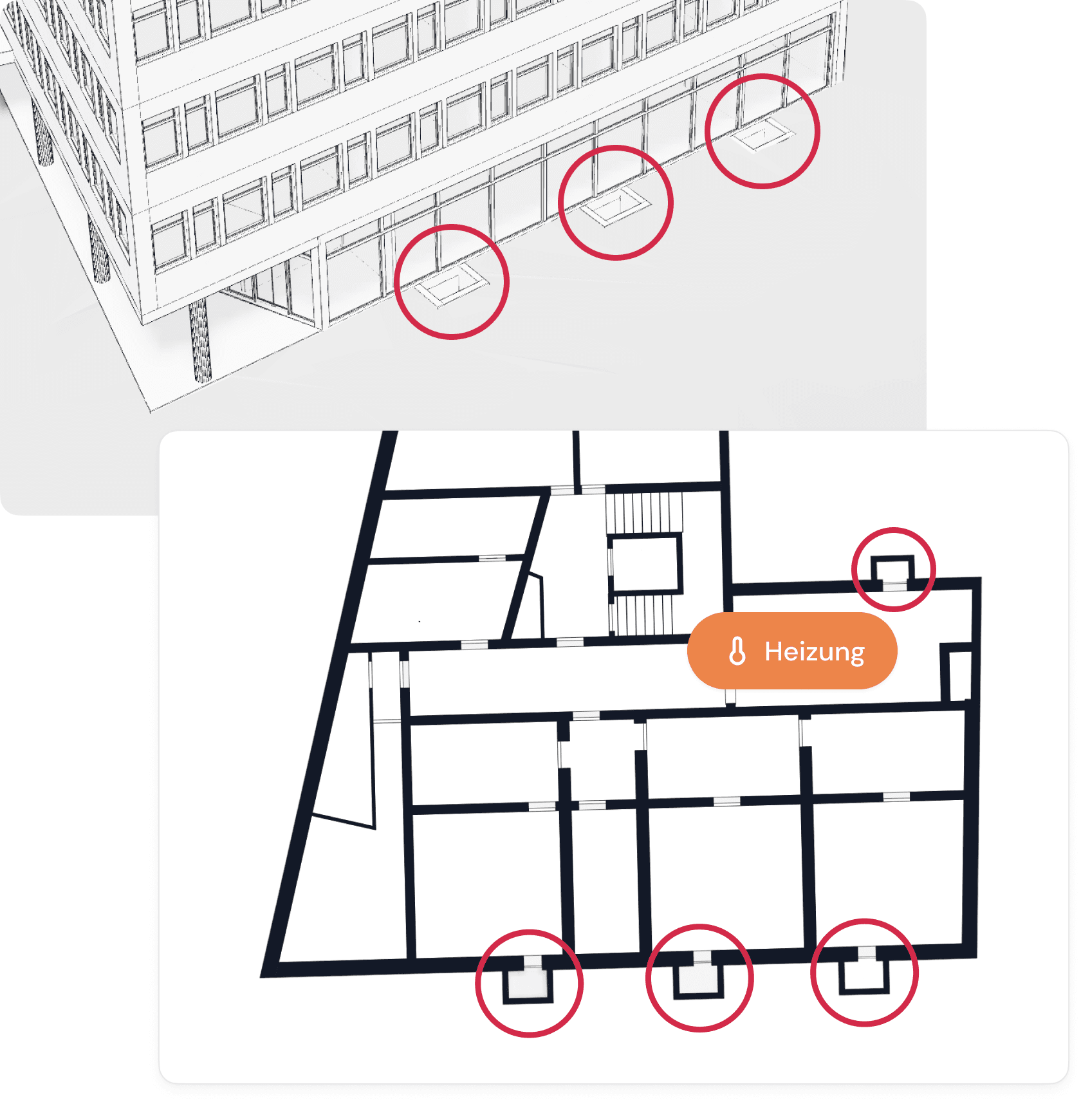
In addition to portfolio-level analysis, NORM can create a digital 3D building twin for each property. This model represents the actual building geometry, from roof structures and façade surfaces to individual components such as windows, skylights, or solar installations. This enables direct coupling with detailed hazard models and makes it visible which building elements are exposed to which risks. This forms the basis for targeted and cost-efficient climate adaptation.
A concrete example: In the case of heavy rainfall, the model shows where surface runoff impacts the building, for example via windows, light wells, or access points to technical rooms and underground garages. This makes it possible to identify critical vulnerabilities before damage occurs.
The 3D building model is not only relevant for climate risk analysis and defining adaptation measures. It can also be used efficiently to verify summer thermal comfort in accordance with SIA 180, a key requirement for certifications such as SNBS, Minergie-Eco, or Minergie-P.
Conclusion: From Analysis to Action
Whether physical climate risks or related regulatory requirements from FINMA, the challenges for property owners and financial institutions are complex. NORM provides transparent decision-making foundations at every level, from individual plots to entire portfolios.
In addition to traditional risks such as storms, hail, or flooding, we also consider local heat and environmental factors that have often been overlooked. This enables early identification of risks, data-driven prioritisation of renovations, and targeted investments in resilience and climate adaptation.
Would you like to understand how your portfolio is positioned? Contact us for a non-binding initial analysis.