“The most effective implementation our Energy Office has ever launched”: Why the Energiesprint Wil works
Many municipalities want to accelerate energy-related renovations in existing buildings. But a gap often emerges between advisory services, funding programmes and actual implementation. The Energiesprint Wil shows how a municipal model can close this gap: with a low-threshold entry point, a concrete basis for decision-making and a clear bridge to implementation.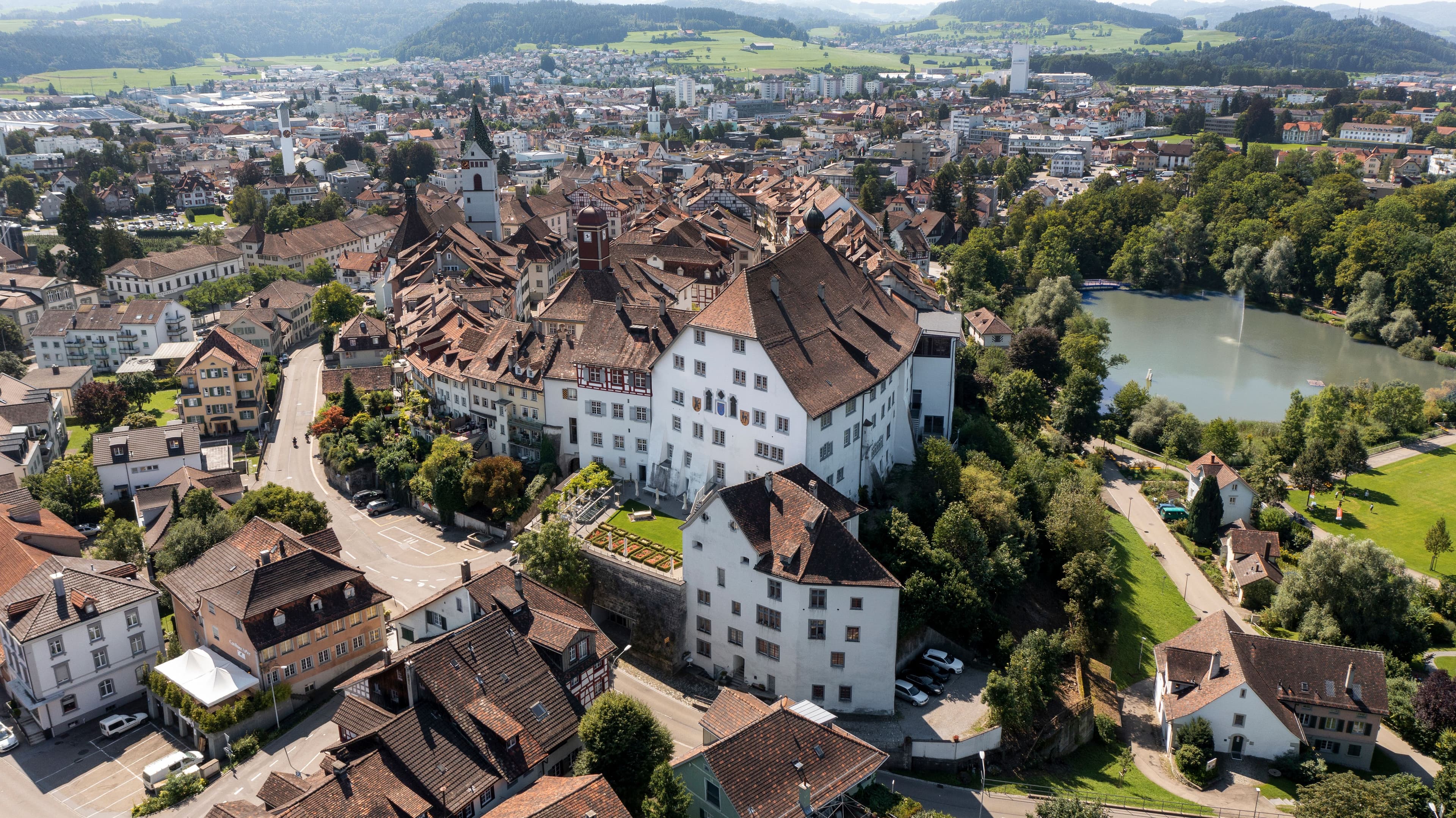
Image: Damian Haller - 3 2 1 V I R A L
Many municipalities are familiar with the pattern: the goals in energy and climate strategies are defined, the funding landscape exists, and the technical solutions are available. And yet, implementation in the existing building stock often progresses more slowly than politically required.
The reason is rarely a lack of interest alone. More often, what is missing is a simple entry point. Property owners face complex technical, financial and organisational questions and therefore postpone decisions. This is precisely where well-intentioned offers differ from an effective municipal model. The Energiesprint Wil is an example of what this difference can look like in practice and what other cities and municipalities can learn from it.
The Wil model in numbers
The project, developed by the consulting firm e-futura together with NORM, started in December 2025 with 100 free energy consultations for single-family homes and was increased to 200 due to high demand. A total of 236 registrations were received, and in around 50 percent of cases, explicit implementation interest was already recorded during the final consultation.
By the end of March 2026, the quota had been exhausted and registration was closed. The confirmed consultation appointments are expected to continue until July 2026. For a municipality, this is the relevant point: it is not reach that counts, but how much actually gets set in motion afterwards.
The key difference lies in the bridge to implementation
Many programmes do valuable preparatory work but effectively end with the report. This is exactly where the Energiesprint Wil takes a different approach. From the outset, the offer was designed so that the analysis is followed by a next step: prioritisation of measures, structured support and, where appropriate, the involvement of local specialist companies. This implementation phase is now visibly placed at the centre of the project website.
This turns a classic energy consultation into a municipal activation tool. Property owners receive not only an analysis, but a process: What makes sense? What is a priority? Which measures are worthwhile? Which partners are suitable? How can things move forward concretely?
This is particularly important in the existing building stock. In practice, renovations often do not fail because of a fundamental lack of willingness, but because of uncertainty, information overload and the missing translation into feasible next steps.
Why the model works in Wil
The success in Wil cannot be reduced to a single factor. Its strength lies in the combination of several elements:
The entry point is simple. Those who want to participate do not first have to work through technical terminology, funding logic, variant studies and negotiations with consulting firms. The offer is clearly formulated and aligned with the perspective of property owners.
The basis for decision-making is concrete. The digital energy certificate shows at a glance where a house stands energetically, which measures have the greatest effect, what investments can be expected and which funding programmes may generally be relevant.
Implementation is considered from the start. Those who want to can build on the consultation and receive support with the next steps, for example with heating replacement or the planning of a photovoltaic system. This is precisely what increases the likelihood that orientation turns into concrete projects.
The municipal context builds trust. When such an offer is jointly supported by the city, the Energy Office and regional implementation partners, the barrier to entry is lowered. The programme is perceived as guidance, not as a sales pitch.
Dunja Dux, Energy Officer and Head of the Energy Office of the City of Wil, summarised this idea succinctly early on:
With the Energiesprint Wil, we reduce entry barriers and create orientation. This gives homeowners a clear basis for decision-making instead of loose puzzle pieces.
The impact goes beyond individual consultations
Building modernisation programmes often gain broader political support when they not only promise ecological impact, but also show how property owners, the municipality and the regional economy benefit in concrete terms. For municipalities, this perspective is relevant. Wil provides a convincing practical example that demonstrably has an impact at all levels.
An effective renovation programme supports climate and energy goals on the one hand and generates orders and value creation in the region on the other, especially where neighbourhoods do not automatically benefit from major infrastructure developments such as district heating expansion. This is exactly what makes such models politically and economically viable.
Andreas Breitenmoser, City Councillor for Supply and Energy of the City of Wil, assesses the impact from a municipal perspective:
For me, this is the most effective implementation our Energy Office has ever launched: it brings homeowners into action, triggers concrete investments and strengthens Wil’s local businesses. This keeps value creation in our city.
From pilot to scalable municipal practice
Not every element has to look identical in every municipality. What matters is the underlying principle: low entry barriers, understandable decision-making bases and a clear path to implementation.
This is precisely where the scalability of the model lies. Municipalities do not need to reinvent the topic of energy-related renovation. They need a format that gets people moving and that can be communicated clearly both internally and externally. This is why it is worth looking at Wil for other cities and municipalities as well: because it shows how energy consulting can lead to concrete action.
More about the project: energiesprint-wil.ch