Structured Building Data as the Foundation for AI
Artificial intelligence promises significant efficiency gains in the real estate industry. However, the key factor is not simply whether AI is used, but whether it is built on a consistent, structured, and up-to-date data foundation. This is precisely where one of the industry's greatest challenges lies.
Data is the foundation of every AI application
Building data is a form of complex enterprise data. Its structure differs fundamentally from that of many other industries. A building consists of thousands of objects with spatial relationships, technical properties, and interdependencies. Information exists not only as text, but also as drawings, geometries, spreadsheets, photographs, documents, and videos.
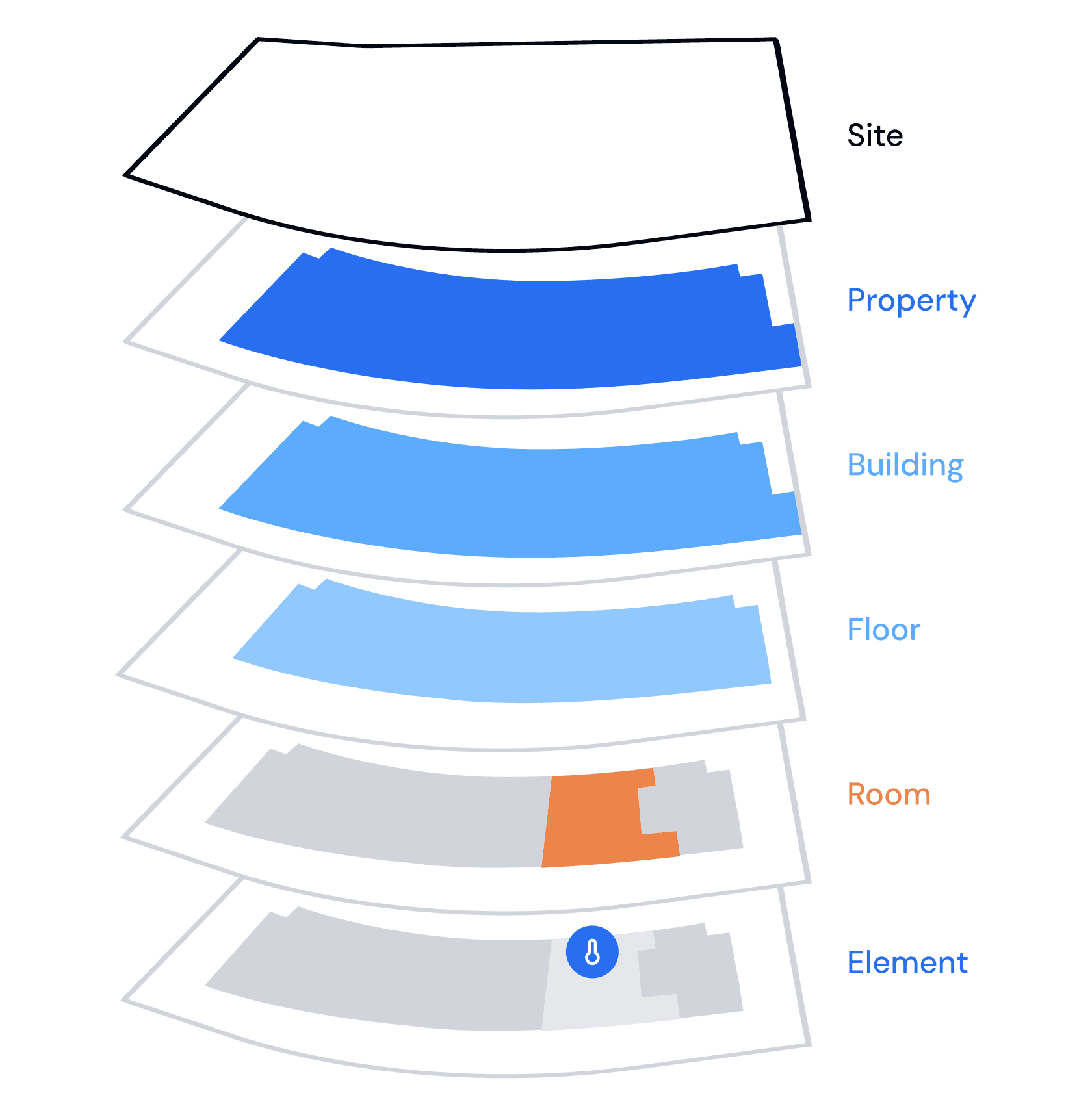
There is also a temporal dimension, as buildings continuously evolve over time. Heating systems are replaced, spaces are repurposed, façades are renovated, and technical systems are expanded. A data model must be able to capture these changes without losing the connection to previous states.
The greatest challenge is therefore not collecting information, but keeping it consistent, up to date, and interconnected over the long term.
This is exactly what determines whether AI can be used productively. Even the most powerful AI model will produce unreliable or incorrect results if the underlying data is incomplete, inconsistent, or outdated.
The technology already exists
The good news is that the required technological building blocks are already available. Open standards such as IFC provide an internationally recognized format for building information. These are complemented by open-source innovations in 3D modeling and open geospatial data.
What is often missing, however, is the integration of these building blocks into a consistent building data model that can be maintained and extended throughout the entire lifecycle of a real estate portfolio.
This is where traditional BIM systems often reach their limits. They were primarily designed for planning and construction rather than the long-term management of large existing property portfolios.
How NORM does it differently
NORM combines open standards with proprietary technology to overcome the limitations of today's BIM systems. Our goal is to consolidate all information across a real estate portfolio into a single digital twin and keep it consistently maintained over time. Specifically, we address these challenges through six core principles:
- Unique modeling of buildings and properties. Buildings, properties, and their individual components are represented within a consistent data model. Public identifiers such as EGID and EGRID ensure that even complex ownership and building structures can be uniquely identified.
- Portfolio instead of individual assets. Individual building models are combined into a unified portfolio-wide data model. This provides the foundation for cross-portfolio analytics, benchmarking, and AI applications.
- Digitization of existing building portfolios. Most existing buildings lack a consistent digital data foundation. Information from drawings, documents, photographs, and on-site surveys is systematically captured and integrated into the data model.
- Integration with geospatial data. The building model is enriched with GIS data, enabling spatial analyses such as heat exposure, natural hazards, and the surrounding environment to be incorporated directly into analytics and AI applications.
- Foundation for scenarios and simulations. The data model serves as the basis for energy, renovation, and occupancy scenarios. Different alternatives can be simulated and objectively compared before investment decisions are made.
- Versioning and historical tracking. Building data changes continuously. The data model documents these changes throughout the entire lifecycle of a property and ensures that AI applications always operate on the latest available information.
What this enables with AI
A structured data model makes it possible to deploy AI use cases productively and at scale across an entire real estate portfolio. Below are two examples of how NORM applies AI today.
From documents to structured building data
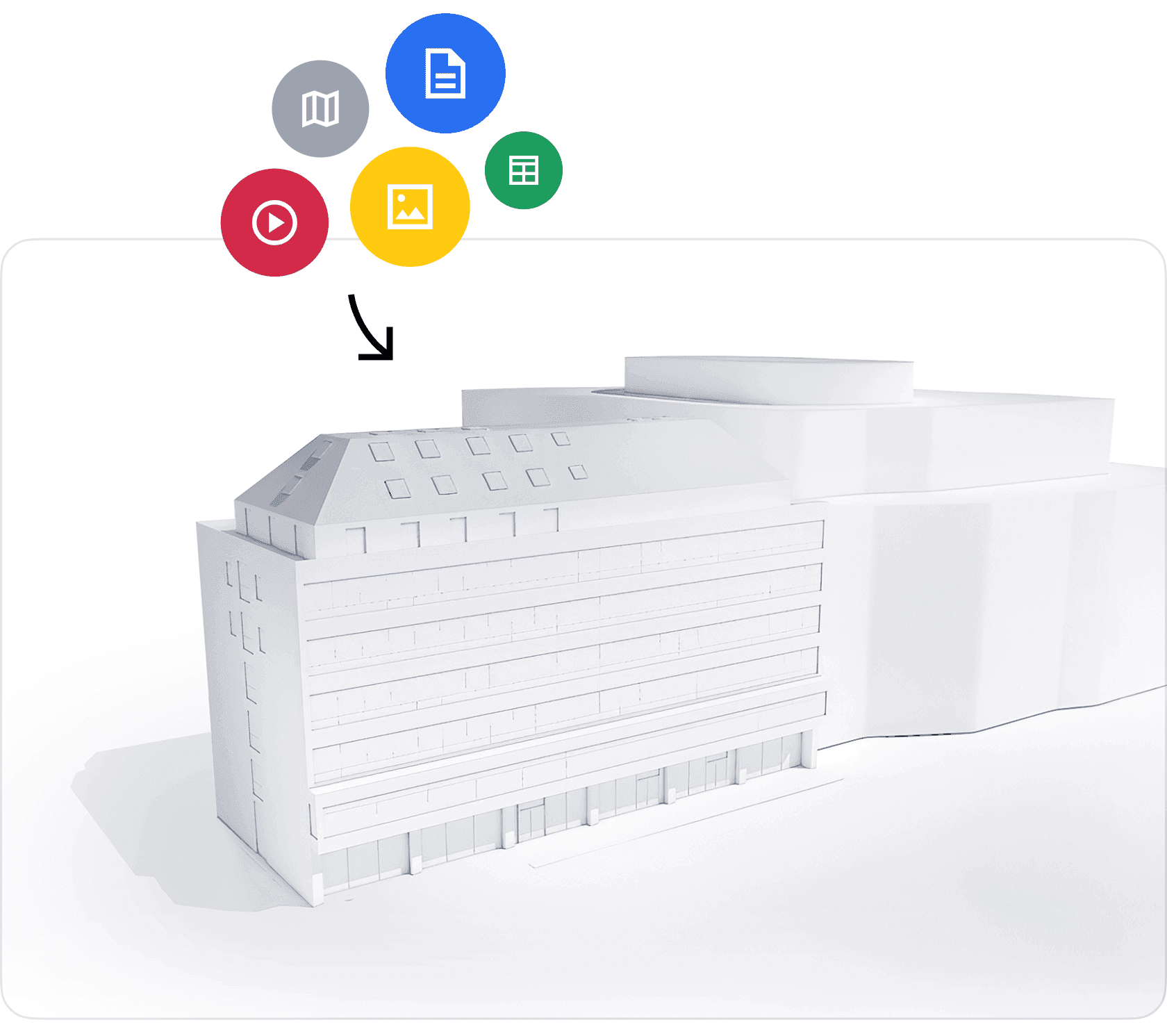
One of the greatest strengths of modern AI is its ability to extract information from unstructured sources such as drawings, photographs, or handwritten inspection reports.
However, the real value is created only when this information is automatically stored in the correct location within the building data model.
For example, AI does not simply extract text from a maintenance contract. It identifies the affected heating system, assigns maintenance intervals to the correct asset, and updates the corresponding properties within the building model.
The result is not another document stored in a file repository, but high-quality structured data that can immediately be used for further applications such as energy analysis, maintenance planning, or regulatory reporting.
Analyze, compare, benchmark – in seconds
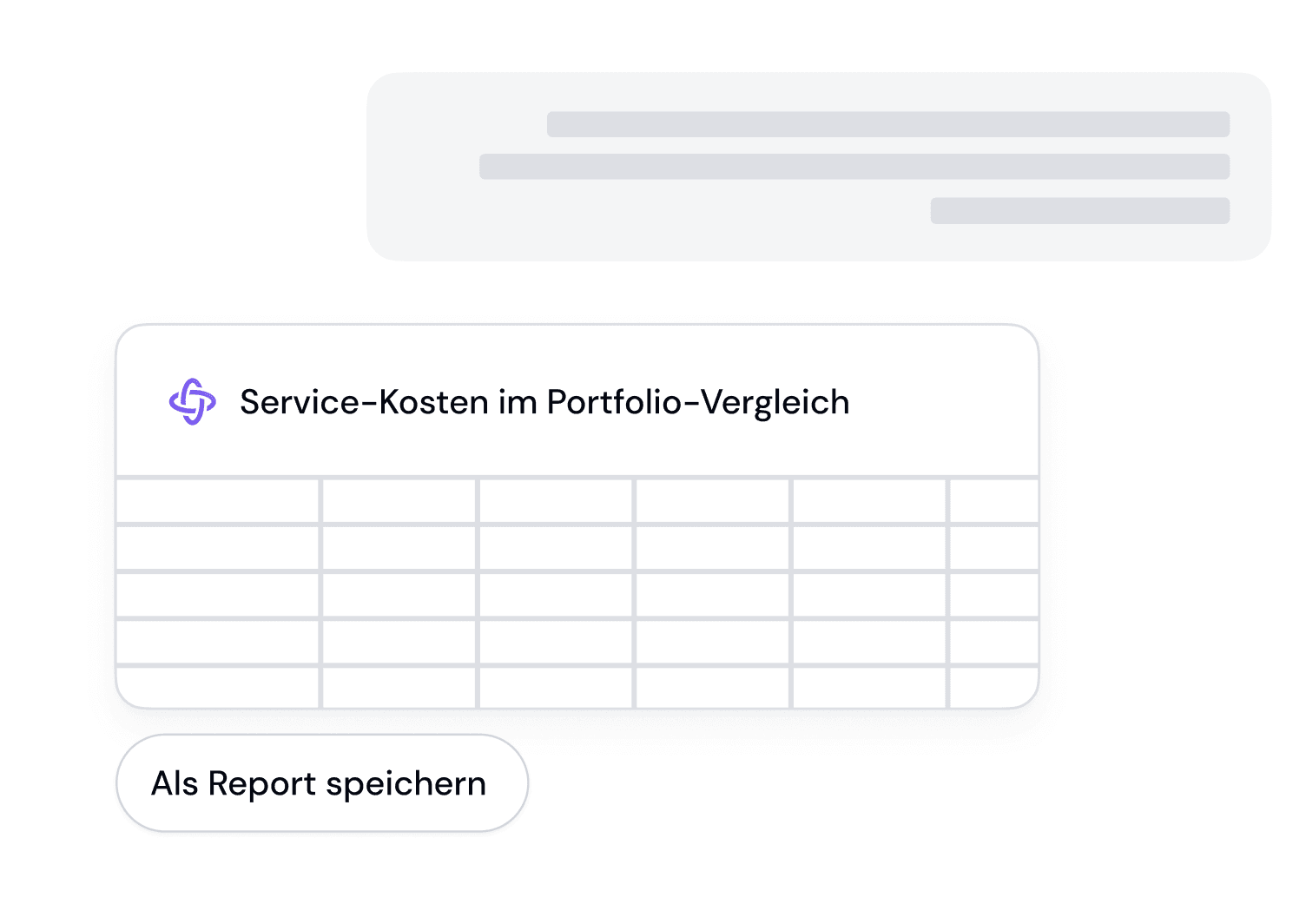
Analyzing, comparing, and benchmarking building data becomes a matter of seconds. Instead of consolidating information from multiple systems or building dedicated BI dashboards for every new question, users can query data directly across the entire portfolio. The NORM Assistant accesses the consistent building data model and links and aggregates information across buildings, assets, and portfolios.
Which buildings generate the highest maintenance costs per square meter of usable floor area? Which renovation measures have the greatest impact on the portfolio's CO₂ reduction pathway? Which buildings should be prioritized over the next five years?
Questions like these typically require extensive analysis across multiple data sources or purpose-built dashboards in conventional systems. With the NORM data model, the AI Assistant delivers answers immediately, transparently, and always based on the latest available data.
Conclusion: Productive AI starts with the data model
The real bottleneck for AI in the real estate industry today is not AI itself, but the lack of a consistent, portfolio-wide data model. Only when information is structured and interconnected can AI applications operate reliably and at scale. The sustainable competitive advantage therefore comes not from having the most powerful AI model, but from the quality of the data model on which it operates.
Would you like to discover how structured building data can unlock the full potential of AI across your real estate portfolio? Contact us.